

Vaccinations
What Are Vaccinations?
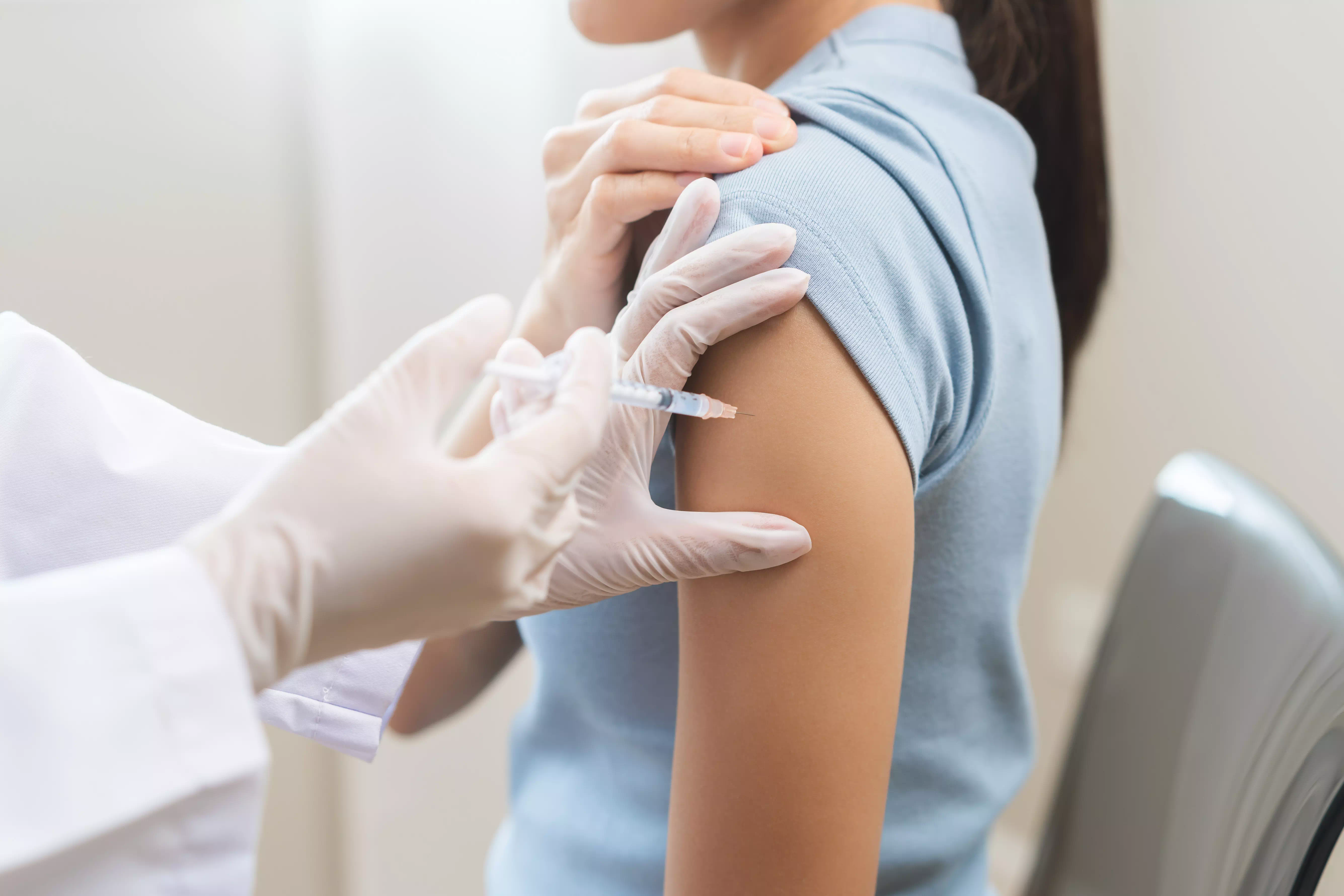
Vaccination is the administration of a vaccine made from a pathogen such as a bacterium or virus to build immunity, making you less likely to become infected by that pathogen, or so that even if you do catch the disease, it stays mild.
Vaccines are made by weakening or removing the pathogenicity of the various bacteria and viruses that cause infectious diseases. By doing this, they prompt the body to produce antibodies (protein molecules that bind to pathogens and work to remove them from the body), making you less likely to catch that infection and preventing it from becoming severe.
Incidentally, vaccination serves not only to prevent infection in the individual but also to prevent the spread of infectious disease in society as a whole. Our clinic offers vaccinations for influenza and shingles.
Influenza
What is influenza?
Influenza is an acute respiratory infection caused by the influenza virus.
After infection, the disease develops following an incubation period of about one to three days, with systemic symptoms such as a high fever of 38°C or more, headache, joint pain, and muscle pain, as well as symptoms like a sore throat, runny nose, and cough, just as with an ordinary cold.
In children, it can also be accompanied by febrile seizures, otitis media, and acute encephalopathy. In older people and those with underlying conditions, it can become severe, for example by developing into pneumonia.
Influenza vaccine
An effective measure for preventing influenza is vaccination before the season starts.
It takes about two weeks for the influenza vaccine to take effect, and the effect lasts for five to six months. In Japan, influenza typically circulates from around December to the following April, so it is advisable to get vaccinated each year between October and around mid-December.
Note that because the influenza vaccine is designed to work against the types of virus predicted to circulate that year, it is best to consider getting vaccinated before the season every year.
Vaccine side reactions include pain, redness, and swelling at the injection site, and systemic reactions such as fever, headache, and fatigue; rarely, shock or anaphylaxis-like symptoms can occur.
[Who can be vaccinated]
Those aged 6 months and older but under 13 receive two doses, and those aged 13 and older usually receive one dose. (Two doses are also possible if deemed necessary.)
However, for children who have not yet entered elementary school, because of the interplay with other vaccinations, we ask that they be vaccinated at a pediatric clinic.
Shingles (Herpes Zoster)
What is shingles?
Shingles is a skin condition caused by a virus called the varicella-zoster virus. The virus has this name because it is also the cause of varicella, that is, chickenpox.
The first time you are infected with this virus you get chickenpox, with blisters all over the body including the head and face; but even after the rash disappears, the virus settles for decades in places called ganglia, like stations on the railway lines of the nerves, inside the body. When your immunity drops because you are tired, have caught another illness, or have been weakened by treatment for an illness, this bully of a virus comes out of the station, crawls out along the nerve tracks, and reaches the skin.
Usually only one nerve is affected, so a band-shaped rash appears on one side of the body, following the distribution of the nerve. The skin turns red and blisters form, the surface stings, and there is deep pain inside the body. Sometimes the rash comes first, sometimes the pain. We often see patients who come to dermatology saying things like: “I had a headache so I went to neurosurgery and had an MRI, but it found nothing,” “My lower back hurt so I went to orthopedics and applied a medicated patch, and then a rash appeared,” or “My stomach hurt so I went to gastroenterology and had an endoscopy, but it found nothing.”
In young people the pain often disappears within a few weeks, but in older people it can persist for months, and in some cases years. Humans seem to find a headache harder to bear than pain in the arms or legs, and with shingles on the head, quite a few patients report that the unbearable headache makes daily life difficult.
Anyone who has had chickenpox in the past can develop shingles. Because immunity declines with age, it tends to be common in people in their 50s to 70s, and it is said that about one in three people develops it by age 80. It is sometimes said that you only get it once in a lifetime, but even after shingles heals the virus still lurks in the body, so if you live long enough you can get it any number of times.
There is no need to worry about passing it to people who already carry the same virus, that is, people who have had chickenpox, but the virus can be passed to infants and others who have not yet had chickenpox, who may then develop chickenpox.
Because it is basically spread by direct contact, care is needed not to let others touch the blisters. Rarely, in what is called disseminated herpes zoster, the virus circulates throughout the body via the bloodstream and produces blisters like those of chickenpox; in that case it spreads through the air, so isolation is advisable.
Shingles vaccine
[Who can be vaccinated]
Those aged 50 and older, and those aged 18 and older who are judged to be at high risk of shingles, can be vaccinated. Because it is a voluntary vaccination, it is fully self-paid.
Vaccination not only reduces the incidence but can also be expected to make the disease less severe and leave less lingering pain if it does develop. Since the incidence of shingles tends to rise after age 50, those who are worried are welcome to consult us.
There are two types of shingles vaccine, a live vaccine and a recombinant vaccine, with the following differences. For both, the effects of vaccination include reducing the incidence as well as making the disease less severe and less likely to leave lingering pain if it develops.
[Who can be vaccinated]
Those aged 50 and older, and those aged 18 and older who are immunocompromised, can be vaccinated.
(If you are vaccinated at our clinic, you cannot receive the Minato City subsidy.)