

Moles & Skin Growths
This page explains surgical methods for those who want to have moles or growths removed cleanly. For the types of growths, please see here.
Surgical Methods
There are various methods for removing a growth. The goals of surgery are to leave as little scarring as possible, to leave none of the growth behind, and to prevent future recurrence; but achieving all of these at once is sometimes difficult, and there is a trade-off: removing thoroughly leaves a larger scar, while removing conservatively can leave part of the growth or let it recur quickly. We listen to your wishes, present a recommended method, and choose the surgical approach together with you.
① Cutting with a metal scalpel or scissors, or punching out with a trephine (punch), then suturing
We give a local anesthetic injection and cut out the growth with a scalpel or scissors. It can also be punched out, much like using a cookie cutter. When closing the wound, we may suture both the inner and outer layers of the skin, or just the outer layer. The inner sutures dissolve in three to six months, while the outer sutures are removed one to two weeks later. There is bleeding during surgery, but after suturing the wound care is relatively simple. As complications, if there is heavy bleeding, a hematoma (a pool of blood under the skin) can form, or wound dehiscence (the skin failing to knit together and gaping open) can occur. The scar is usually linear.
② Cutting with scissors or punching out with a trephine (punch) without suturing
We give a local anesthetic injection. However, for very small soft fibromas, the so-called acrochordons (skin tags), anesthesia is usually unnecessary. Because the skin has the ability to make wounds smaller and shallower on its own, this method deliberately leaves the wound unsutured and lets it heal while an ointment is applied. The scar is usually round.
③ Shaving with a high-frequency radio-wave scalpel
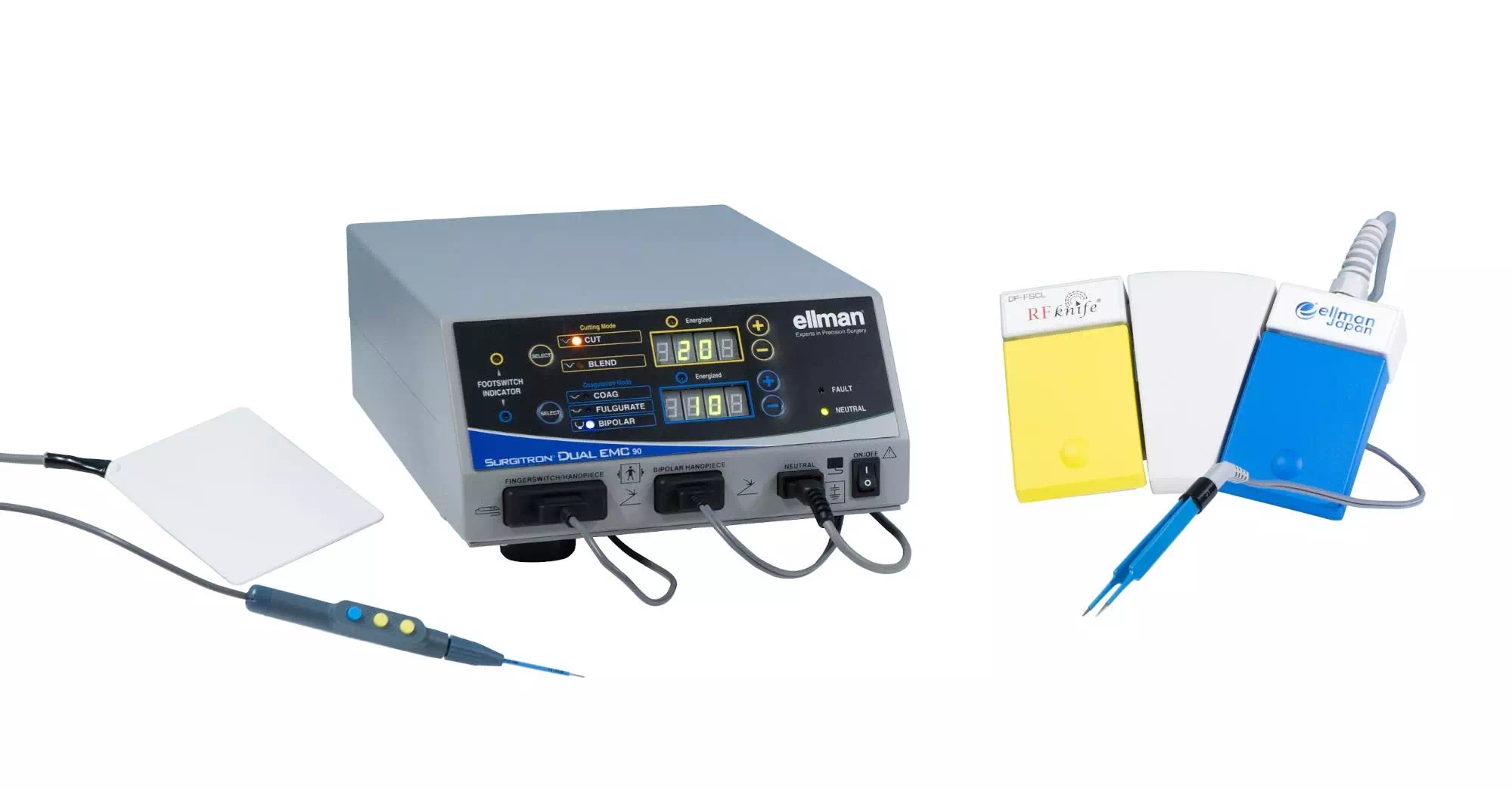
We give a local anesthetic injection and remove the growth by shaving it down. We shave until the surface is level, or slightly concave. Because the skin has the ability to make wounds smaller and shallower on its own, this method deliberately leaves the wound unsutured and lets it heal while an ointment is applied. There is little postoperative bleeding. The scar is usually round. Our clinic uses the Surgitron Dual EMC as its high-frequency electric scalpel.
④ Treatment with a carbon dioxide laser
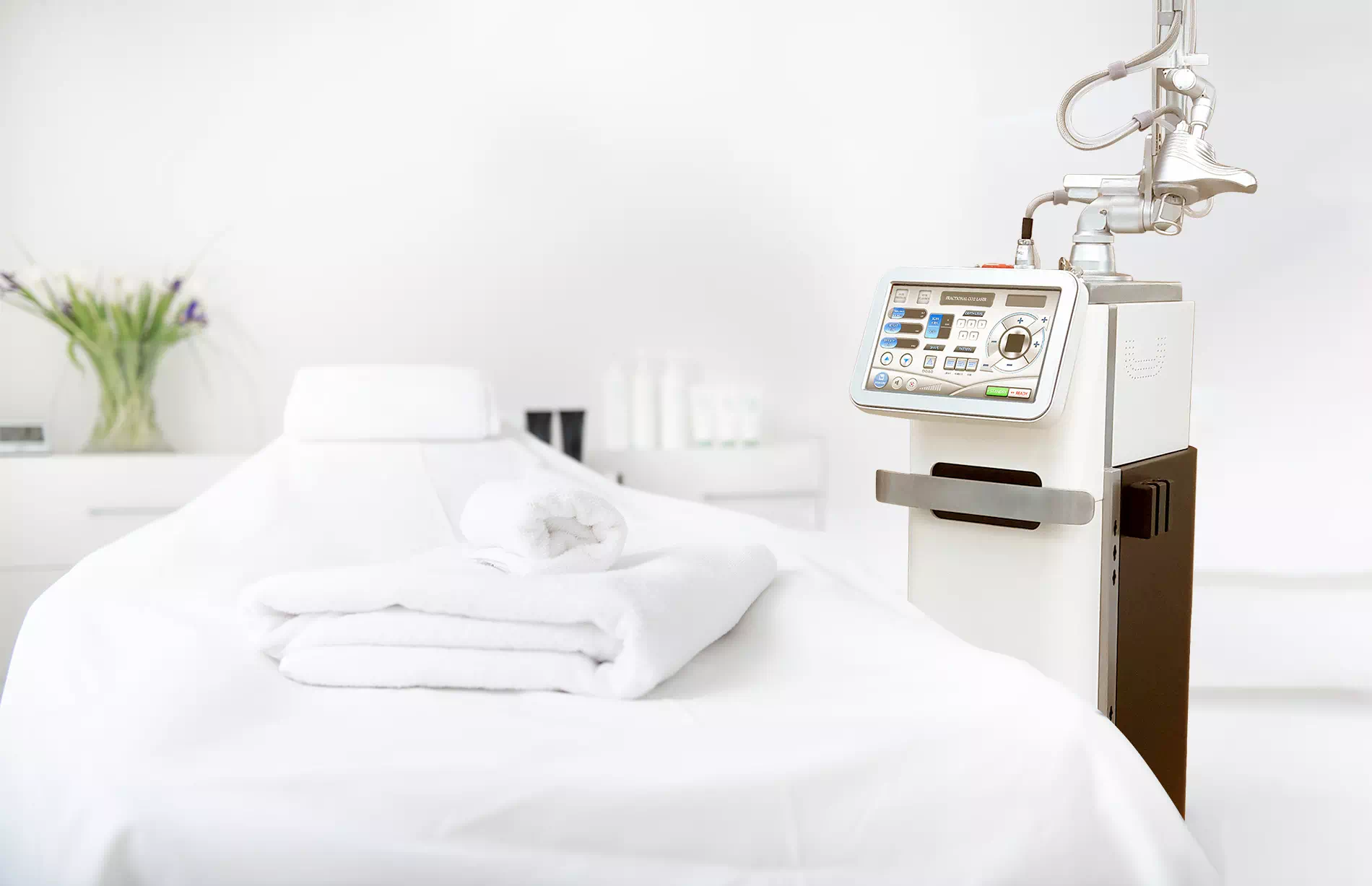
We use either a local anesthetic injection or a tape or cream anesthetic, then apply the laser. We shave until the surface is level, or slightly concave. Because the skin has the ability to make wounds smaller and shallower on its own, this method deliberately leaves the wound unsutured and lets it heal while an ointment is applied. It has the advantage of causing less damage to the surrounding tissue. The scar is usually round. Our clinic uses the e.f. Fractional CO2 Laser as its carbon dioxide laser.
Comparison of Surgical Methods
The above methods are summarized in the table below.